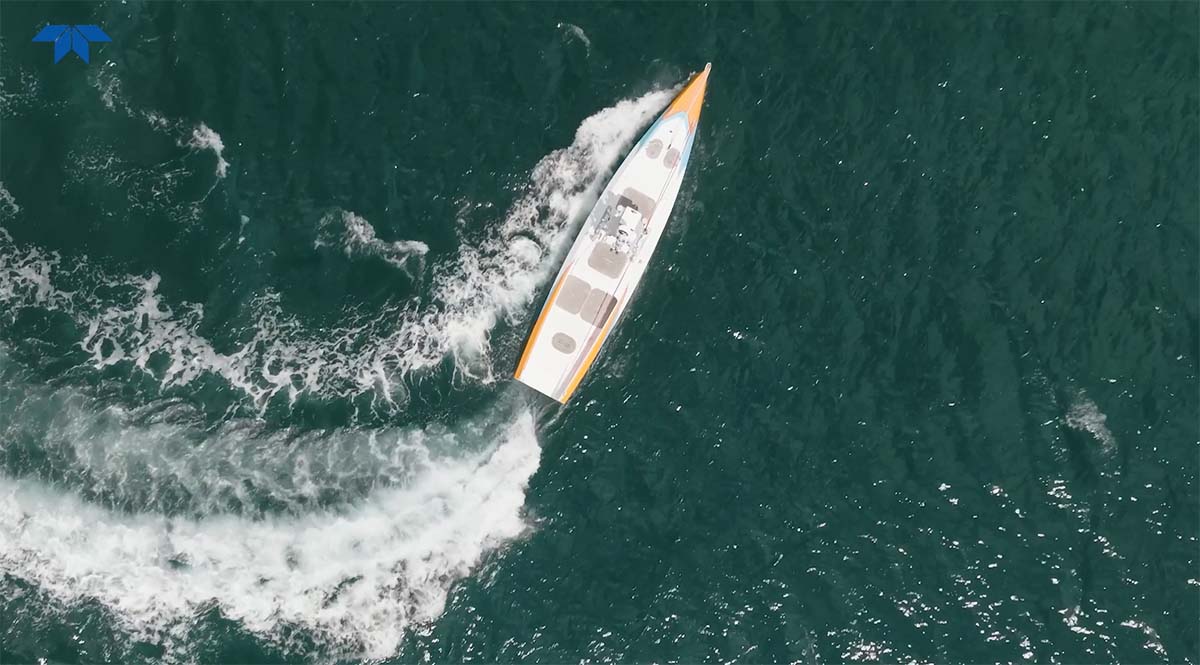
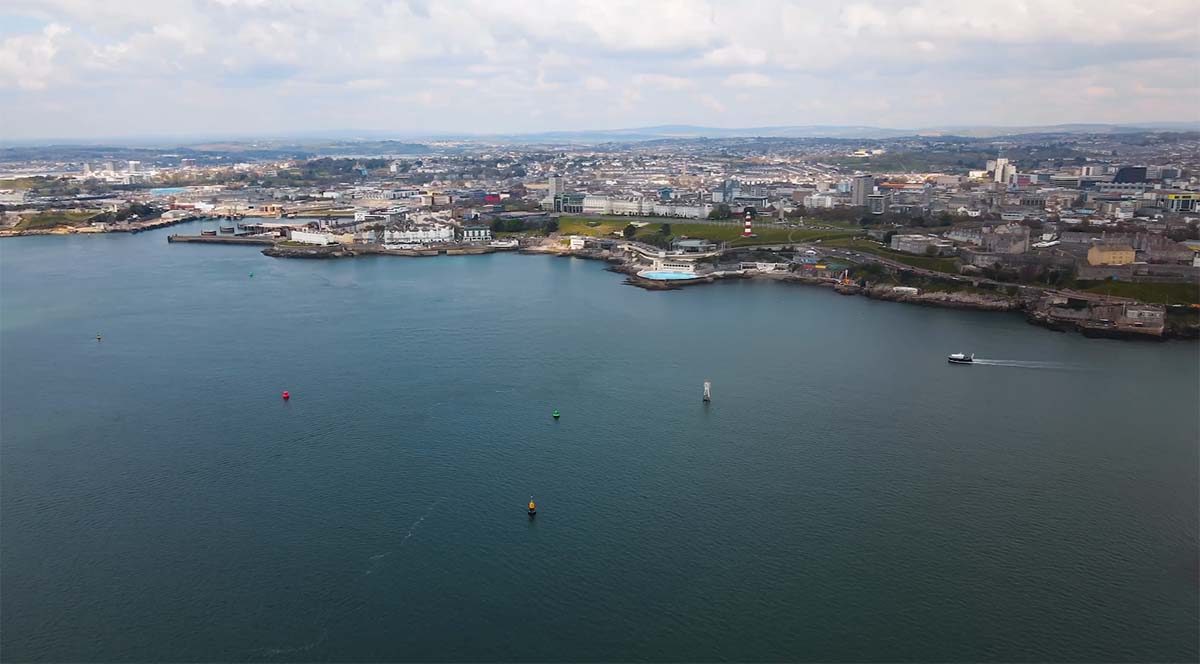
Teledyne Marine and Zero USV have come together in Plymouth, recently recognised as the UK’s marine autonomy hub, to demonstrate how cutting-edge uncrewed surface vessels (USV’s) and high precision sensing technologies are transforming the future of ocean data collection. Shot at Turnchapel Wharf, the heart of Zero USV’s operations, this project highlights the power of seamless integration between platform, software, and instrumentation.
Filming took place across two days in November 2025, capturing real operational activity on and off the water. Turnchapel provides Zero USV with direct access to the water, allowing rapid mobilisation, fast iteration cycles, and continuous development ideal conditions for showcasing the capabilities of both the vessel and Teledyne’s instrumentation.
ZeroUSV’s OCEANUS12 class of USVs are engineered for endurance, stability and reliability. They were developed by the same engineering team behind the Mayflower Autonomous Ship, the first uncrewed vessel to successfully cross the Atlantic. The platform builds on this proven heritage to deliver reliable long-endurance missions. The OCEANUS12 class can conduct missions of up to 20 days, operate in both shallow and deep-water environments, and support a wide range of mission profiles. The vessel is powered by MarineAI’s autonomy software, enabling efficient and intelligent execution with minimal human input.
Teledyne Marine Technology Onboard
The film highlights an integrated suite of Teledyne Marine sensors and systems, each playing a vital role in autonomous surveying:
SeaBat Multibeam Sonar: The SeaBat T-series multibeam provides ultrahigh resolution seabed mapping. With autonomous sonar controls and integrated inertial navigation, it delivers precise results even without direct operator intervention making it ideal for uncrewed missions.
SWiFT SVP (Sound Velocity Profiler): A core component of accurate bathymetric survey, the Teledyne Valeport SWiFT SVP provides fast, high accuracy sound velocity profiles. This ensures real-time data correction and optimises multibeam performance throughout the survey.
FLIR Cameras: Thermal cameras onboard the USV support situational awareness and safety. They’re vital in lowlight or low visibility conditions and provide Zero USV operators with continuous visual monitoring from the remote control hub.
Data Processing in PDS: Survey data is handled and visualised in PDS software, enabling streamlined processing from acquisition through to final outputs.
Together, these technologies enable fully automated hydrographic workflows from acquisition to real-time data visualisation showing how marine survey operations can be conducted more safely, efficiently, and sustainably.
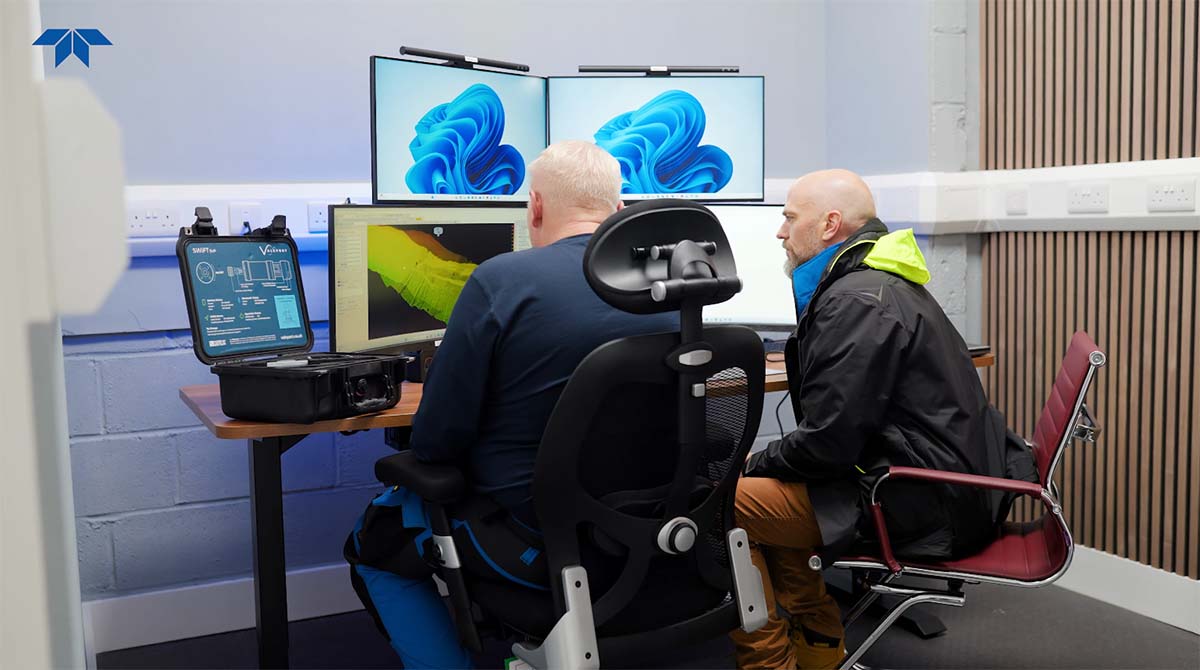
Inside the Autonomous Control Hub
Alongside on water operations, the film captures activity inside Zero USV’s unique Remote Operations Centre (ROC) where operators monitor live sonar feeds, FLIR imagery, and mission data. This environment demonstrates how Teledyne’s instrumentation integrates cleanly with Marine AI’s software to deliver real-time analytics to remote teams offering clients an end-to-end autonomous solution.
This collaboration demonstrates how industry-leading instrumentation and next-generation autonomous platforms can work together to deliver accurate, repeatable, and safe marine surveys without the need for crewed vessels.
What’s Next
As uncrewed technologies continue to grow across defence, marine science, hydrography, and offshore energy, the work between Teledyne Marine and Zero USV represents the direction the industry is heading: integrated, intelligent, and autonomous operations that enhance capability while reducing risk and cost.
Since this deployment, Teledyne has continued to collaborate with Zero USV including the successful launch of a glider from one of their autonomous vessels, further demonstrating the versatility of the platform. We look forward to expanding this partnership and exploring even more innovative uncrewed solutions in the future.

