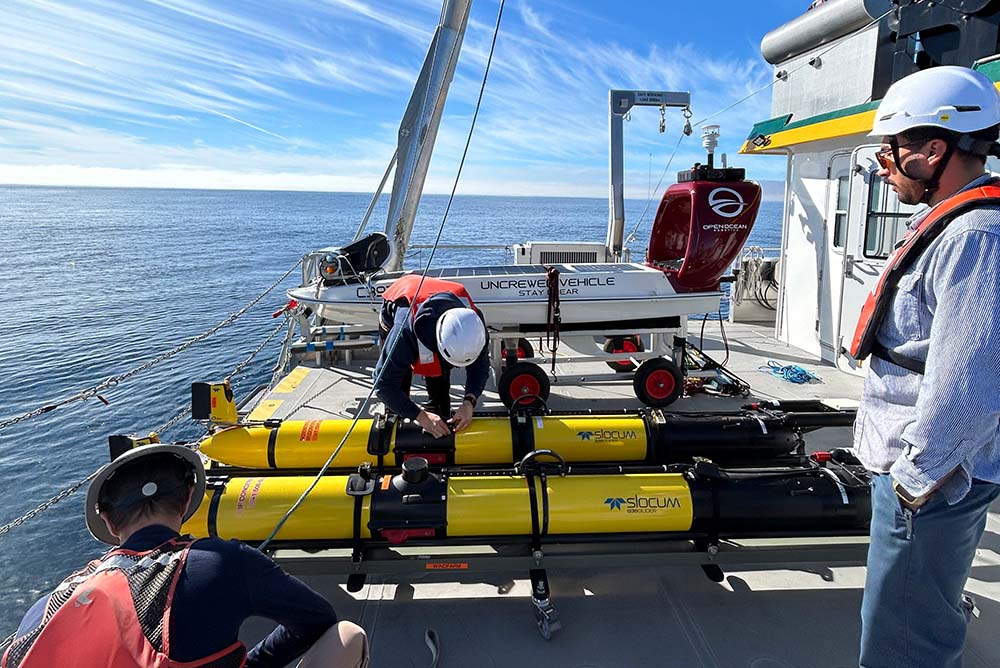
Teledyne Marine demonstrates a scalable approach to offshore environmental monitoring using autonomous surface and subsea systems.
The Challenge
Floating offshore wind development requires extensive environmental monitoring to support permitting and understand conditions surrounding offshore installations. Conventional vessel-based monitoring can be complex and costly, particularly as projects move farther offshore. NOWRDC Project 406 was established to evaluate how
autonomous systems could reduce monitoring costs, expand coverage, and improve the repeatability and reliability of offshore environmental observations.
The Solution
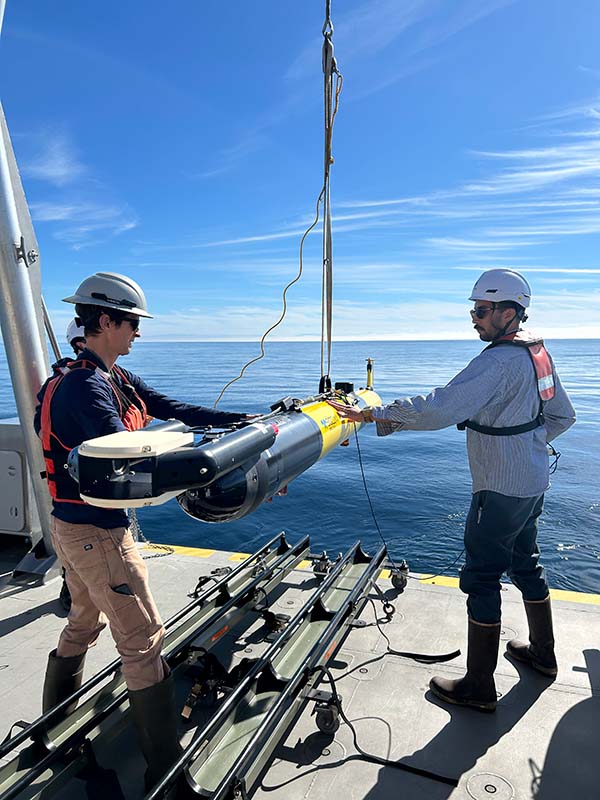
The project combined
Teledyne Marine Slocum gliders for subsurface monitoring with Open Ocean Robotics' DataXplorer uncrewed surface vehicle (USV), creating a complementary surface and subsurface monitoring capability.
Following sensor integration and system testing, the platforms were deployed from August 26 through September 10, 2026, within offshore Lease Area
OCS-P 0562, approximately 32 to 56 km northwest of Humboldt Bay, California.
The Demonstration
Operating in challenging offshore conditions, the autonomous platforms collected multiple environmental datasets, including:
- Temperature, salinity and dissolved oxygen
- Biological imagery and active acoustic measurements
- Passive acoustic marine mammal detection data
- eDNA samples
- Continuous underwater acoustic data
- Wind speed, wind direction, air temperature and barometric pressure

Strong currents of approximately 0.35 to 0.45 m/s required the team to adapt the original survey plan.
Slocum glider thrusters were activated to improve vehicle control, while operators adjusted mission patterns to maintain the glider within the operational area and near the USV.
A key component of the demonstration was testing underwater acoustic communications between the Slocum glider and DataXplorer USV. The team achieved successful communications during the mission, including transmission of marine mammal detection data from the glider to the surface vehicle.
The Outcome
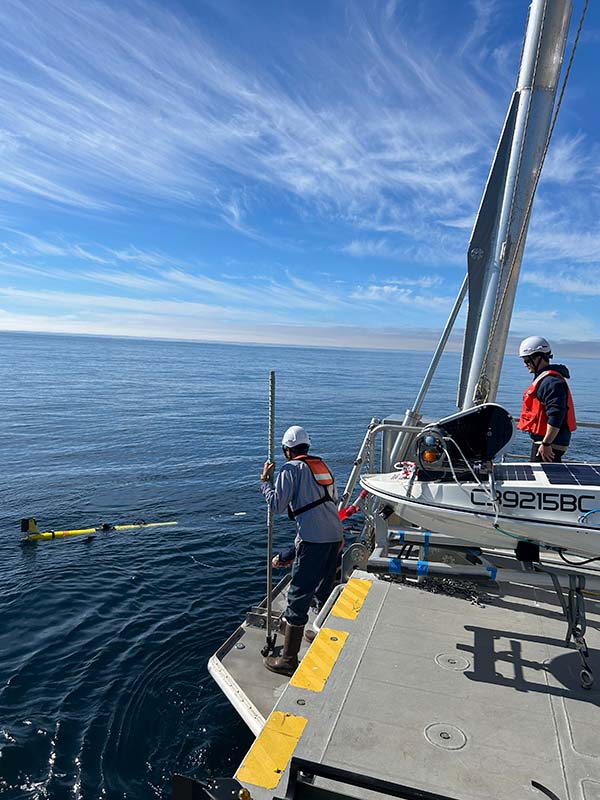 The offshore demonstration successfully completed
autonomous vehicle operations and sensor data gathering under real-world ocean conditions. The project showed how coordinated autonomous surface and subsea platforms can support persistent, multi-sensor environmental monitoring while adapting to changing ocean conditions, mission priorities and communications requirements.
Advancing the Future of Offshore Monitoring
By combining persistent subsea observations, surface monitoring, diverse environmental sensors and vehicle-to-vehicle communications, Teledyne Marine is helping demonstrate a new approach to environmental monitoring for the growing floating offshore wind industry.
Autonomous monitoring has the potential to extend offshore observations while reducing dependence on crewed vessels and enabling more scalable, repeatable environmental data collection.

Sensor data analysis is ongoing, with the project's data analysis and final reporting scheduled for 2027.

