Artificial reefs make a great playground to produce stunning data when passed over with a SeaBat T51 at 800 kHz. But aside from that they have a more meaningful purpose.
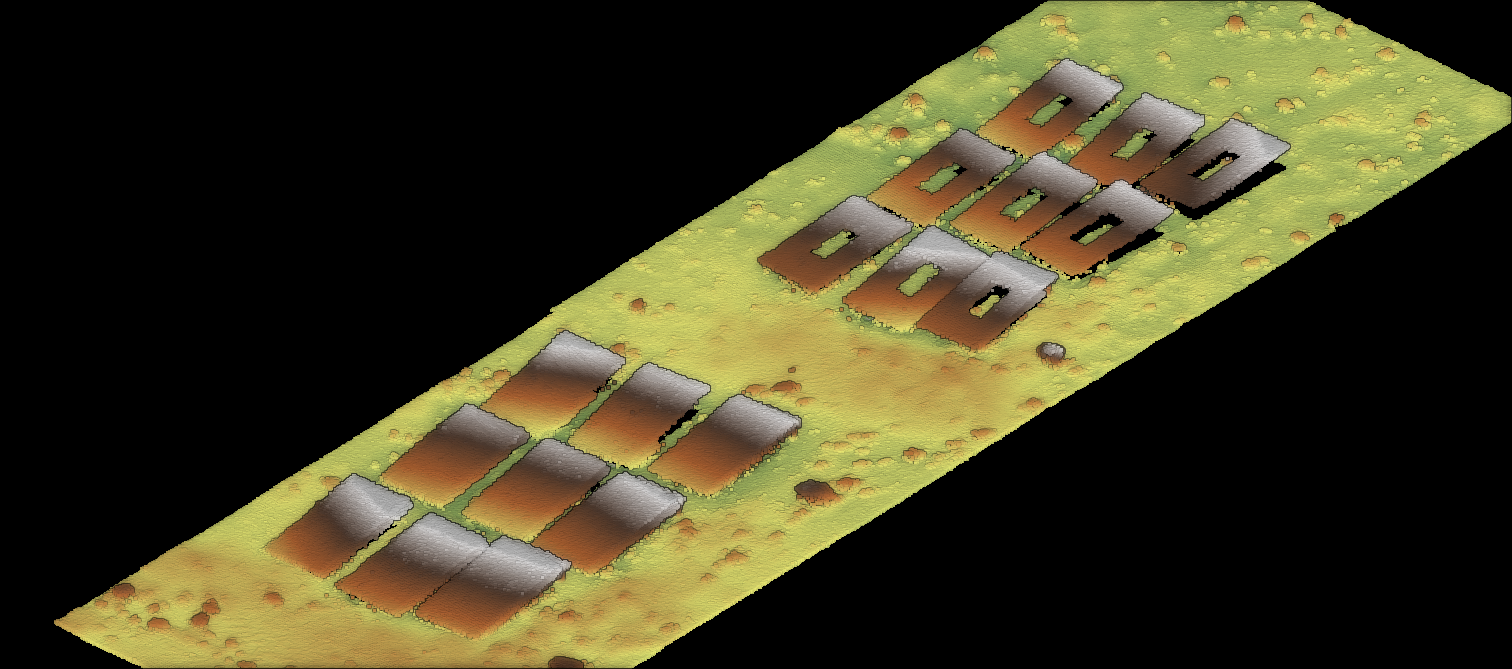
Artificial reefs allow for sea life to recover from a decline in habitat. These reefs act as a recruitment, growth and resting zone for fish species and other sea life.
The image above shows an Algae Table - seen from above this looks like a large chocolate bar, however these concrete plates are designed for small critters to grow on to.
Artificial reef structures come in all shapes and sizes; giving species places to hide, allowing to live off the seafloor from predatory species, or providing a substrate to grow on. Here are a few examples:
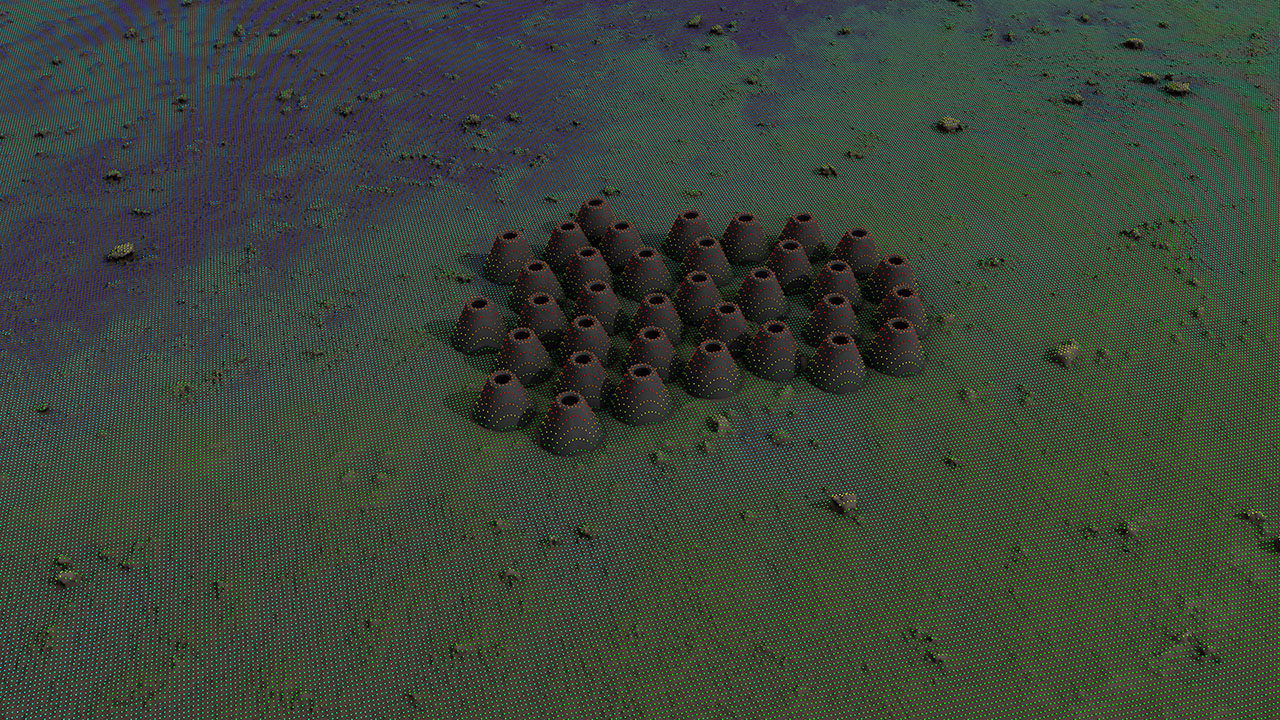
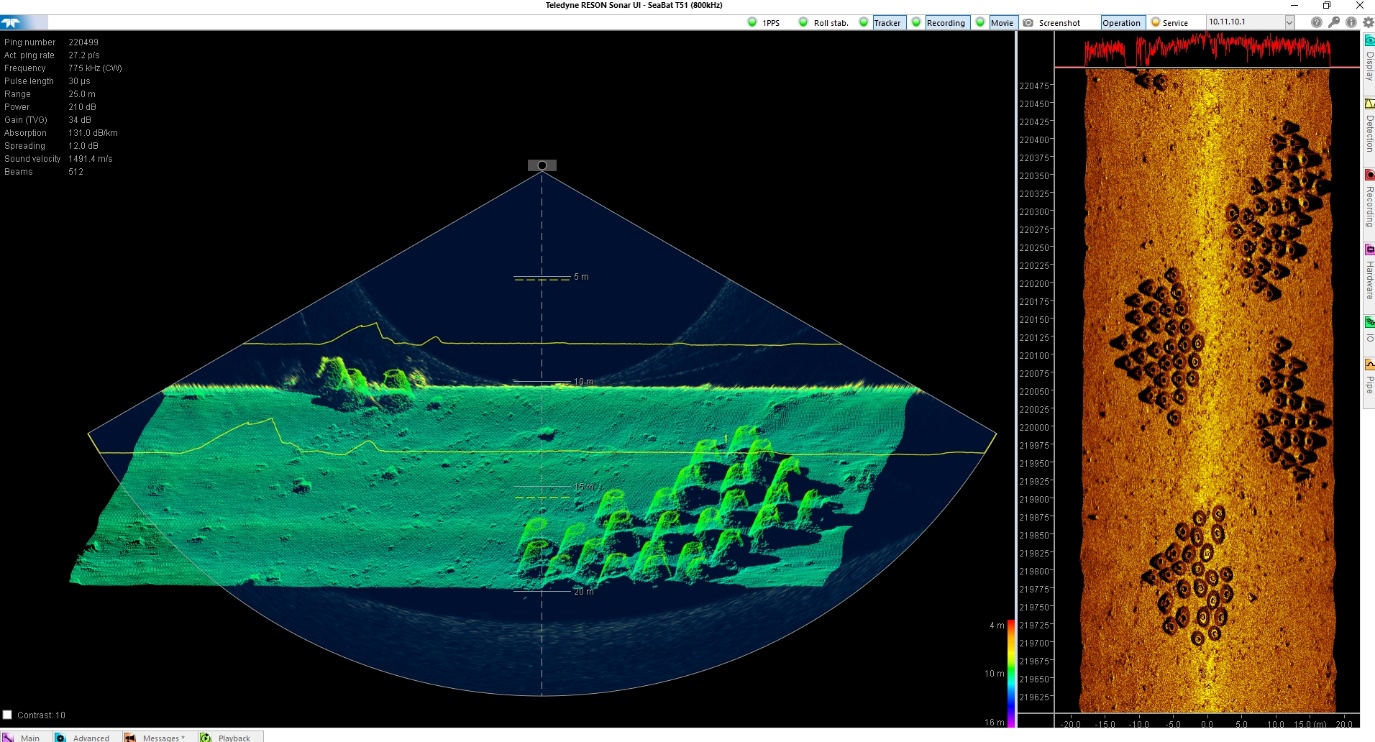
These are known as Cone Fields and each reef cone measures 1.37m by 2.0 Ø m (at the base).
In order to allow exchange of water they have holes in the side - this makes them ideel as good hiding spots for smaller fish.
Nurseries like these have proven to promote the growth of species and increase diversity in challenged habitats.
Below you see concrete rings. These make up an excellent area with hiding spots for marine life; but also an acoustically challenging area for multibeam sonars.
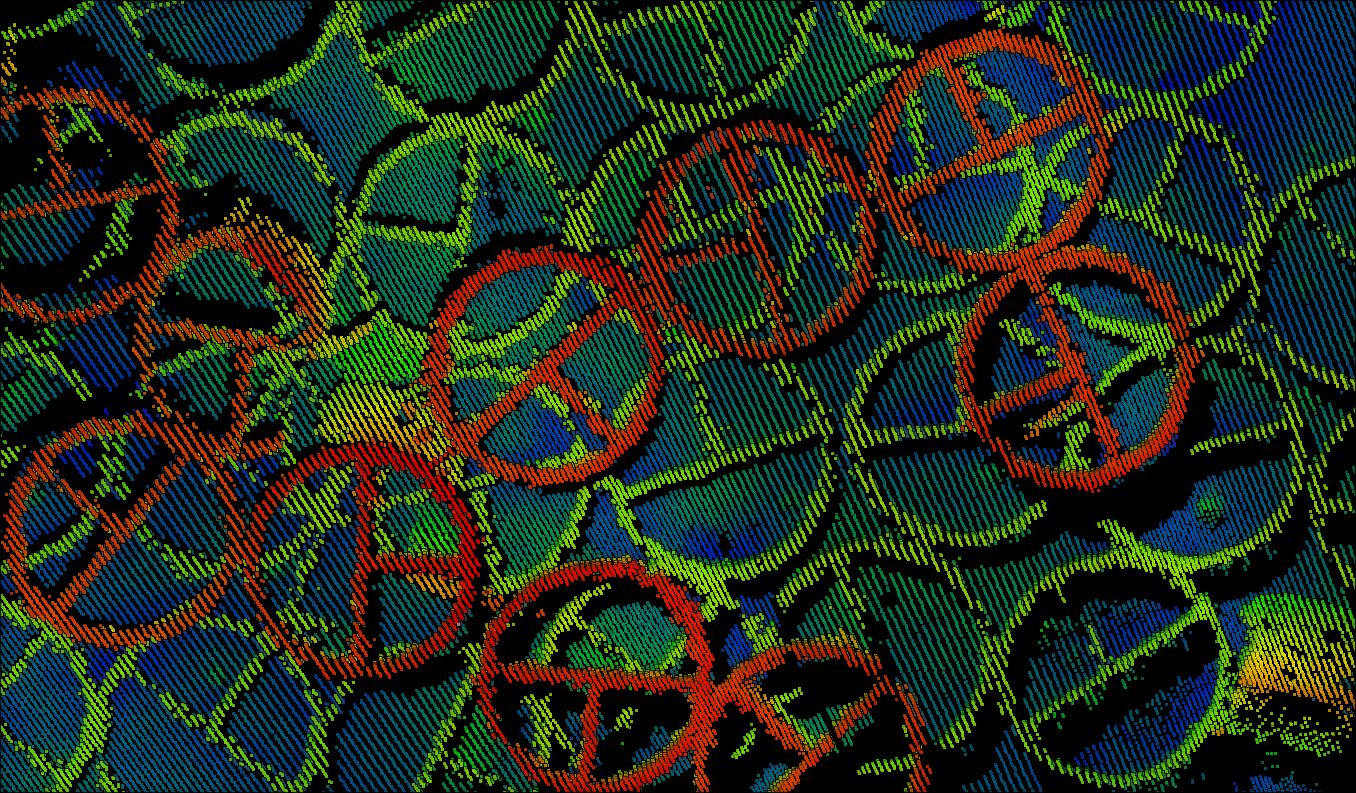
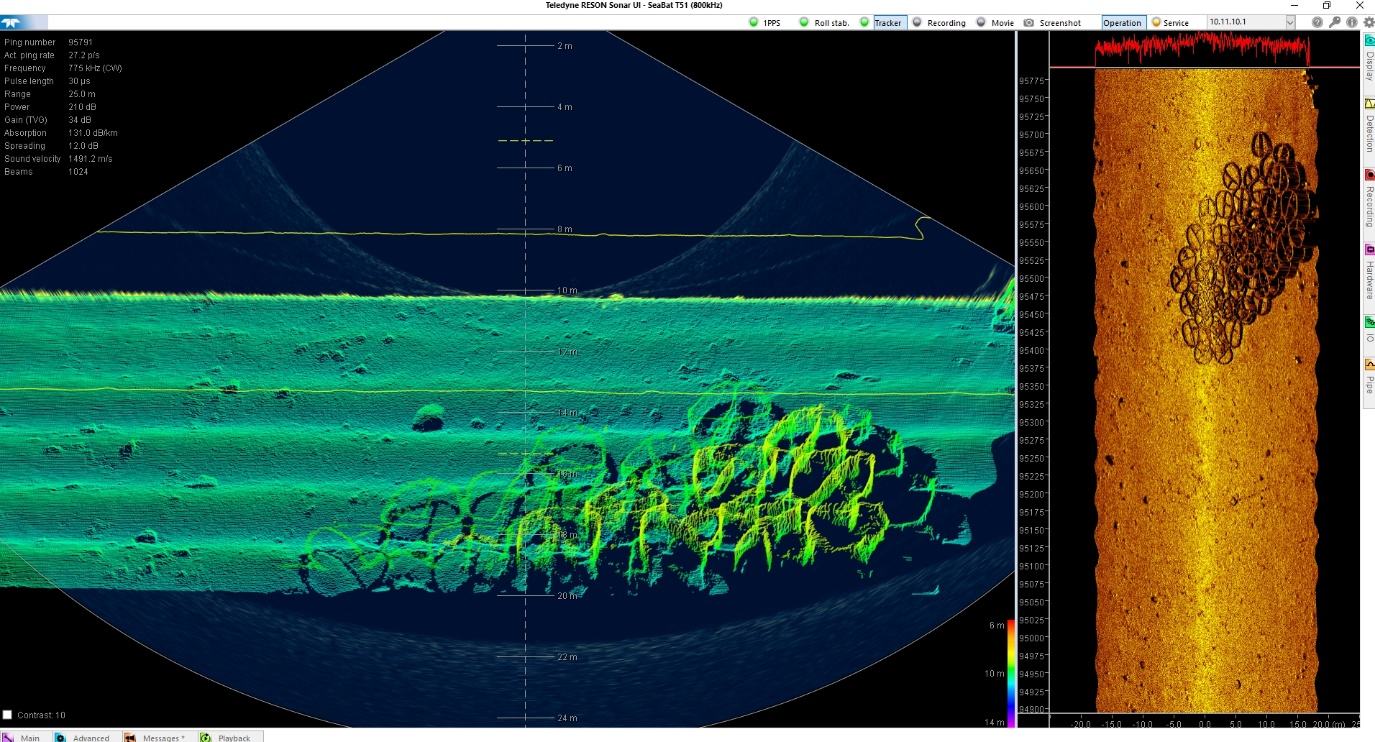
However, thanks to intelligent bottom detection and the finest beam width this is no problem.
Reefs captured with the RESON SeaBat T51-R Multibeam echosounder
All the images of the artificial reefs are captured with a SeaBat T51 at 800 kHz. For your survey this gives you:
- Improved decision making: The frequency flexible 700-800kHz sonar array for up to seven times water depth efficiency - this gives you an extreme resolution that captures all the details you need.
- 350-430kHz sonar operation for traditional and extended range survey requirements maximising your sonar usage
- Hands-free: This model comes with Autonomous Sonar Controls – allowing the operator to focus on other tasks than controlling the sonar
Watch a SeaBat T51 Demonstration

