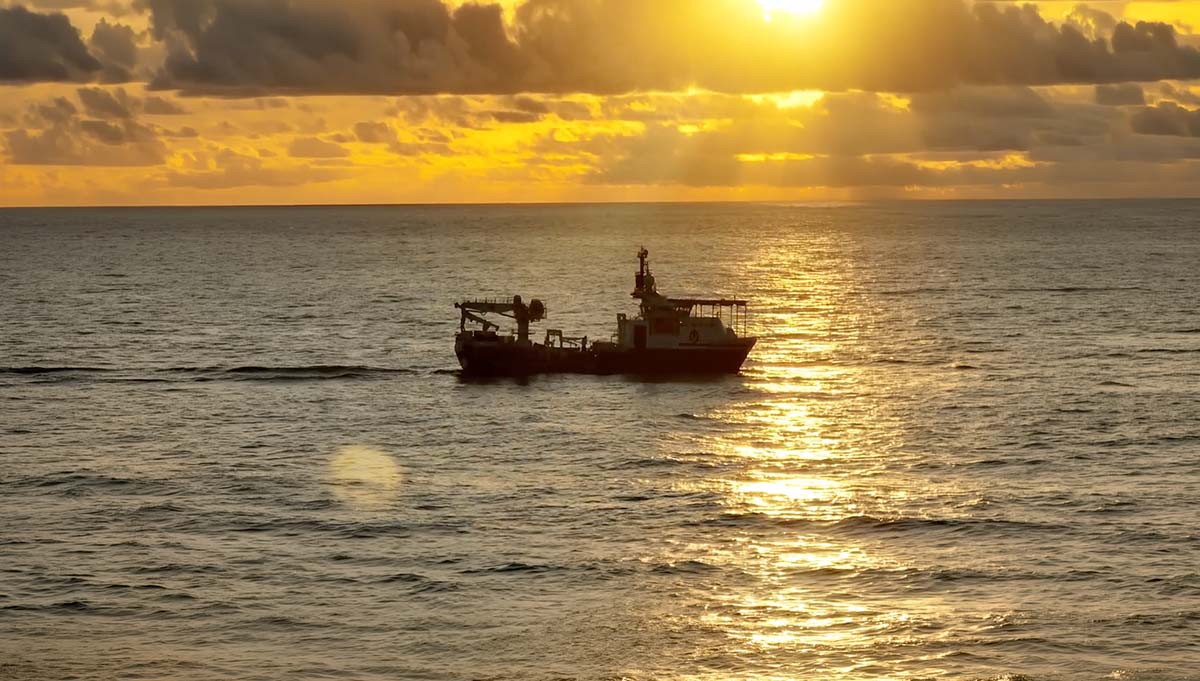
The Role of Teledyne RDI Workhorse ADCP in Near-Bed Velocity, Turbulence, and Sediment Transport – A collaboration with DHI
Deep-sea mining operations present unique environmental challenges, particularly the generation and dispersion of sediment plumes. These plumes can potentially impact benthic ecosystems and water column processes, making accurate monitoring essential for compliance with International Seabed Authority (ISA) and national guidelines and for minimizing ecological impact.
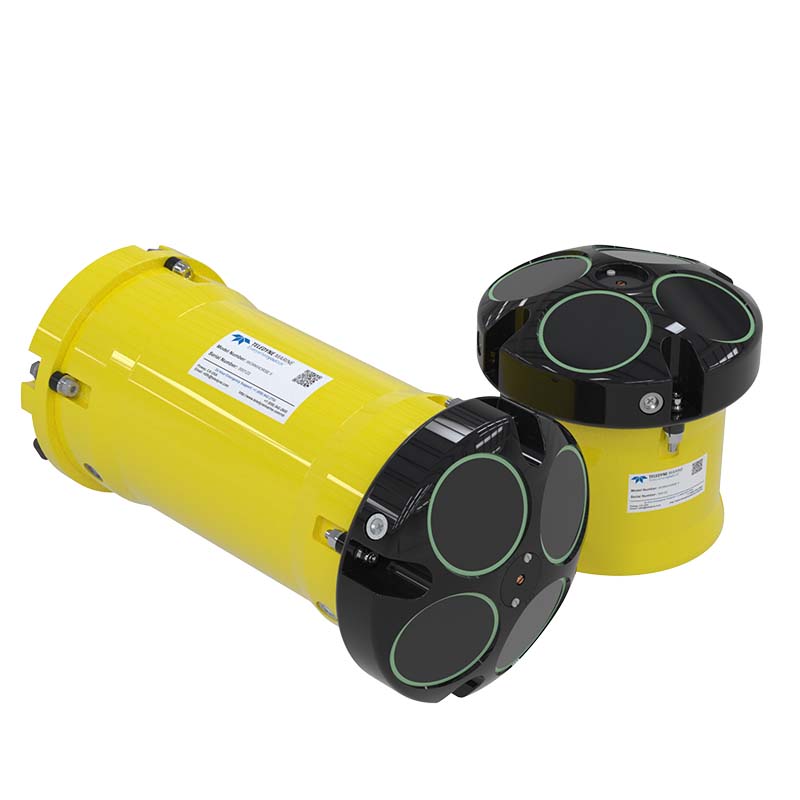
Teledyne RDI’s Workhorse Acoustic Doppler Current Profilers (ADCPs) have emerged as a cornerstone technology for deep-water monitoring. With over 50,000 units deployed globally,
RDI’s ADCPs provide unparalleled reliability in measuring current velocity, turbulence, and acoustic backscatter - critical parameters for understanding sediment suspension and transport. Unlike conventional optical sensors that offer point measurements,
ADCPs deliver spatially resolved profiles of velocity and backscatter throughout the water column. This capability is particularly valuable in deep-sea environments where sediment concentrations are low, and plume dynamics are complex.
Challenge and Solution
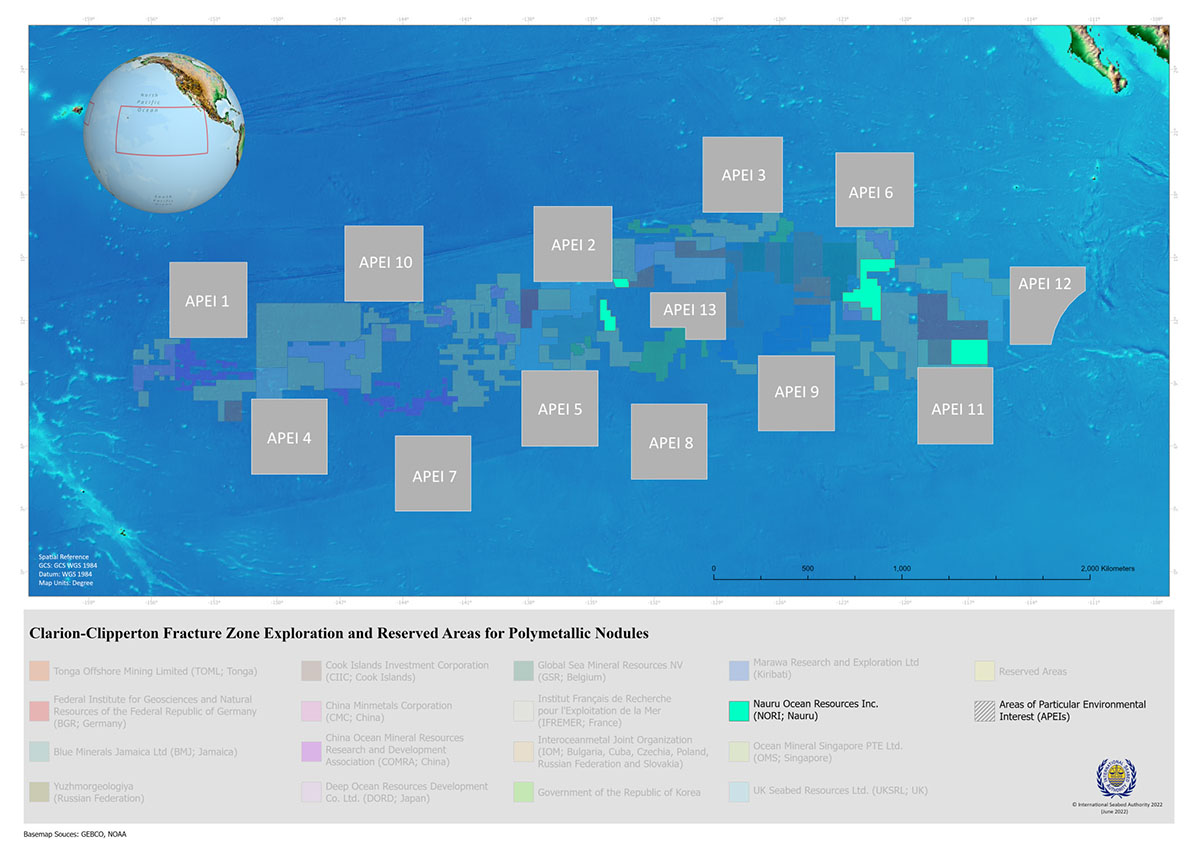
NORI-D is a contract area in the Clarion–Clipperton Zone (CCZ) of the Pacific Ocean held by Nauru Ocean Resources Inc. (NORI), a subsidiary of The Metals Company (TMC). The area contains extensive deposits of polymetallic nodules enriched in nickel, cobalt, copper, and manganese—metals relevant to battery and clean-energy supply chains. NORI-D represents TMC’s principal development asset and has been positioned by the company as a potential source of large-scale primary nickel, subject to the completion of applicable regulatory processes and approvals for commercial recovery.
 DHI acts primarily as an independent scientific and environmental consultant in deep-sea mining, focusing on understanding and modelling the water-column and ecological impacts of seabed mineral activities, with particular emphasis on monitoring and simulating sediment plumes generated by seabed collectors or discharge processes, which are critical to environmental risk assessment because they can transport fine sediments and associated contaminants beyond the immediate mining footprint and therefore inform impact evaluation and mitigation planning.
Sediment behavior in the deep ocean is governed by a combination of physical processes:
-
Near-Bed Shear Stress: Generated by bottom currents and turbulence, shear stress prevents fine particles from settling.
-
Turbulence and Internal Waves: Maintain particles in suspension and influence vertical mixing.
-
Horizontal Transport: Driven by mesoscale eddies and persistent currents, transporting sediment plumes over kilometers.
Monitoring these processes requires instruments capable of resolving fine-scale velocity gradients and detecting suspended particles indirectly through acoustic backscatter.
However, deep-water conditions introduce challenges:
-
Low Ambient Particle Concentrations: Reduce acoustic signal strength.
-
Depth-Dependent Range Limitations: Effective profiling range decreases with depth due to absorption and scattering.
The 600 kHz Workhorse ADCP addresses these challenges by offering high-resolution measurements optimized for near-bed deployments at depths exceeding 4000 m. Its robust design ensures data integrity under extreme pressure and low-acoustic backscatter (clear water) applications.
The publicly available data format and the richness of the dataset—including all parameters and settings—combined with the capability for pre-deployment, individual transducer calibration, provide a significantly improved basis for data review and a deeper understanding of the measurements, especially in the derivation of absolute backscatter.
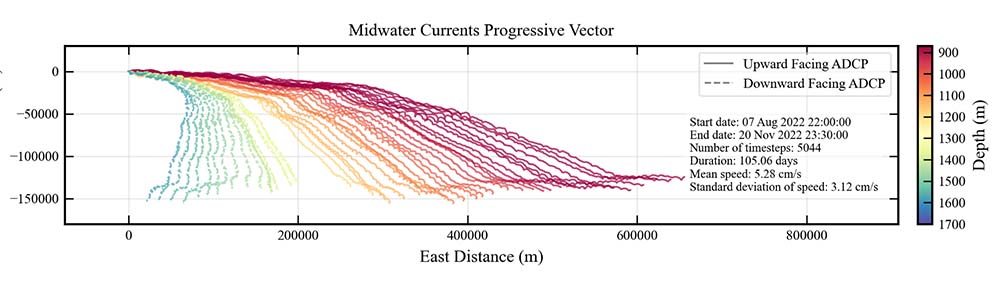
Combined progressive vector plot of Current Velocity for upward and downward looking 75kHz ADCPs (all bins).
Larsen, O., Banks, A., van Berkel, J. J., Clarke, M., Elsasser, B., & Foster, T. (2025).
Monitoring and modelling of deep-water sediment plumes from deep-sea mining.
In R. Sharma (Ed.), *Deep-sea mining: Management, policy and regulation*
(pp. 325–346). Springer Nature Switzerland.
https://doi.org/10.1007/978-3-031-9
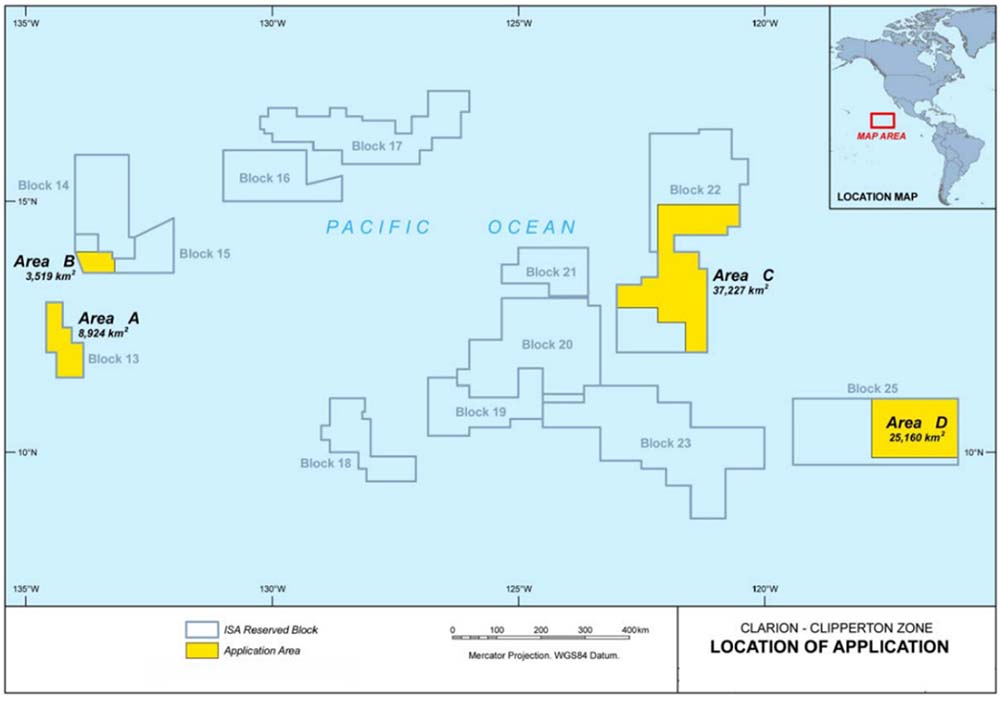
Map of the NORI-D license areas in the eastern Pacific Clarion-Clipperton Zone.
Unique Capabilities of Teledyne RDI Workhorse ADCP
Reliability in Extreme Environments
Field deployments during the NORI-D pilot collector tests demonstrated the Workhorse ADCP’s ability to operate continuously for three months at depths of ~4300 m, with an overall data return of ~ 95%. Rigorous QA/QC procedures—such as error velocity checks and beam solution validation—confirmed data integrity, better characterized observational uncertainty, ultimately leading to better decision support.
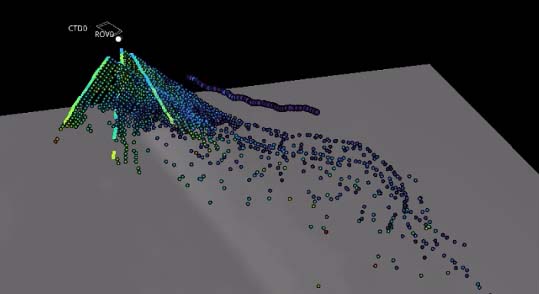 Visualization of a ROV transect of the midwater plume exhibiting highly variable absolute backscatter in individual beams.
Acoustic Backscatter Calibration for SSC
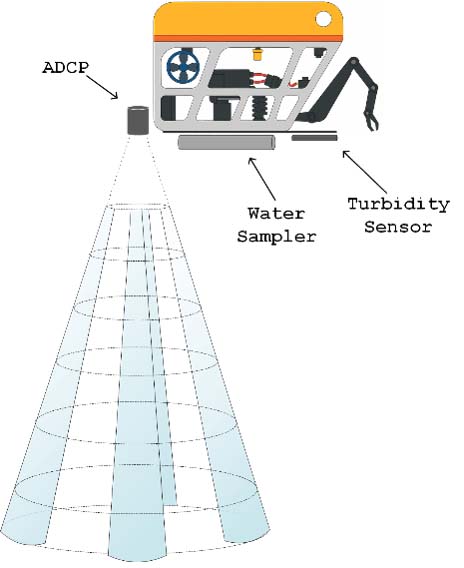 The Workhorse ADCP’s ability to measure echo intensity enables estimation of suspended sediment concentration (SSC) when calibrated against turbidity and water sample data. The calibration workflow includes:
Empirical NTU-SSC Relationship: Established using co-located water samples and turbidity sensors.
Conversion of Raw Counts to Absolute Backscatter: Using a modified SONAR equation.
Transformation to SSC: Via statistical minimization of differences between backscatter and NTU distributions.
This approach was successfully applied during ROV transects trailing the prototype collector vehicle, yielding SSC profiles that informed plume dispersion models.
In shallow-water environments, ADCP backscatter profiles are commonly used to approximate suspended sediment concentration (SSC), providing insight into the relative spatial distribution of SSC through the water column. This approach is more challenging in the deep sea, largely due to difficulties in collecting along-beam water samples that support the empirical transformation (regression typically of form SSC=10a*Sv+b) between backscattering
intensity (Sv) from suspended particles and the corresponding SSC. The experimental method presented below attempts to address this challenge by utilizing a statistical technique which exploits the spatial variability of Turbidity (NTU) measurements and ADCP backscatter profiles collected via ROV.
Establish empirical relationship between NTU and SSC using co-located water sampler (analyzed ex-situ for SSC) and turbidity sensor. Typically, SSC = c ∙ (NTU) + d
Collect multiple ADCP profiles with coincident turbidity measurements at varying depths/elevations to ensure overlap between NTU and backscatter measurements along vertical plane.
Convert raw ADCP counts data to absolute backscatter (dB) using modified SONAR Equation
Sample NTU and dB at depth interval where overlap occurred (3-5m HAB in below example)
Estimate transformation parameters a,b by minimizing the “difference” between sampled distributions. Choice of objective function significantly affects performance. Below example uses ||PiSSC-PiSv||22 for i [1,99] where PiSSC and PiSv are the ith percentile of the SSC (via NTU) and backscatter distributions, respectively.
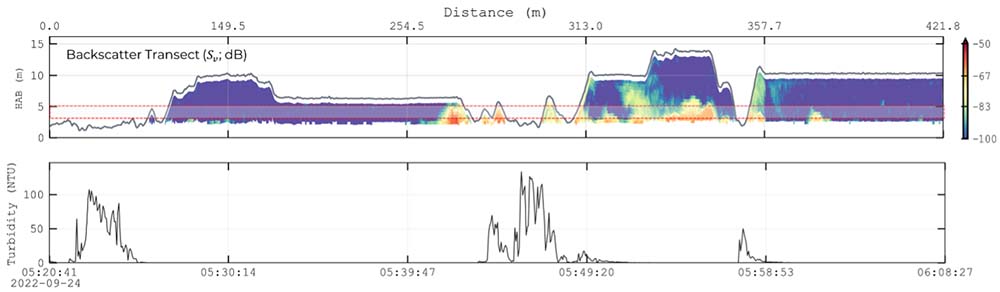
Example backscatter transect (S_v) taken via ROV following 10-100m behind prototype collector vehicle. Height of ROV above seabed shown as thin gray line (left axis), distance along transect shown on top axis. A total of 11 similar transects are used in transformation. Sampling depth interval shown as red dashed box. (Bottom) NTU measurements taken during transect. Note spike in NTU when ROV is very close to seabed.
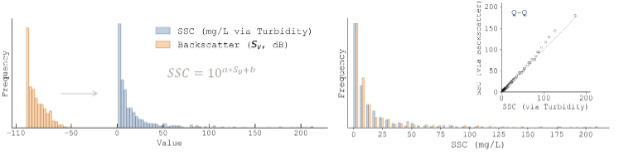
(Left) Pre-transformation distribution of Backscatter and SSC samples from transect group at 3-5m HAB. (Right) Distributions after transformation (estimation of a,b) with inset Q-Q plot showing result of minimization (step 5)
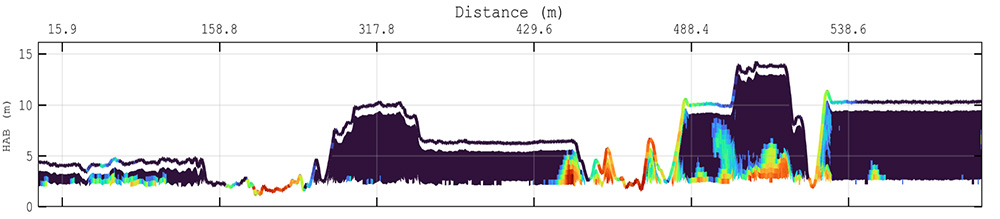
Resulting SSC Transect (mg/L)
Integration with Adaptive Monitoring Strategies
The Workhorse ADCP seamlessly integrates with fixed stations, ROVs, and AUVs, supporting adaptive sampling strategies. Real-time telemetry from seabed landers and mid-water moorings enabled real-time decision-making; for example dynamic repositioning of mobile assets during plume monitoring campaigns.
Applications, Compliance, and Future Outlook
The NORI-D program illustrates the effectiveness of ADCP-based monitoring in characterizing both benthic and mid-water plumes. Acoustic imaging proved reliable across frequencies from 300 kHz to 2400 kHz, with 600 kHz identified as the optimal balance between range and resolution.
Environmental Compliance
ADCP data supports regulatory requirements for plume characterization, including:
Volume and depth of discharge plumes.
Particle concentration profiles.
Horizontal and vertical dispersion modeling.
The publicly available Pods data output format gives advanced users the flexibility to develop custom post-processing routines, quality control procedures, and visualizations. Teledyne offers a publicly available decoders guide which allows such routines to be developed in any programming language, or a free C library for decoding raw data files.
Future Enhancements
-
Advanced Analytics: Integration with Python-based processing toolkits for transparent QA/QC.
-
Custom Visualization: Leveraging PD0 format for bespoke analysis and automated reporting.
-
Extended Deployments: Improved power management for multi-month missions.
ROV transect showing the depth-adjusted derived Absolute Backscatter for all 4 ADCP beams, and Turbidity data collected from the OBS.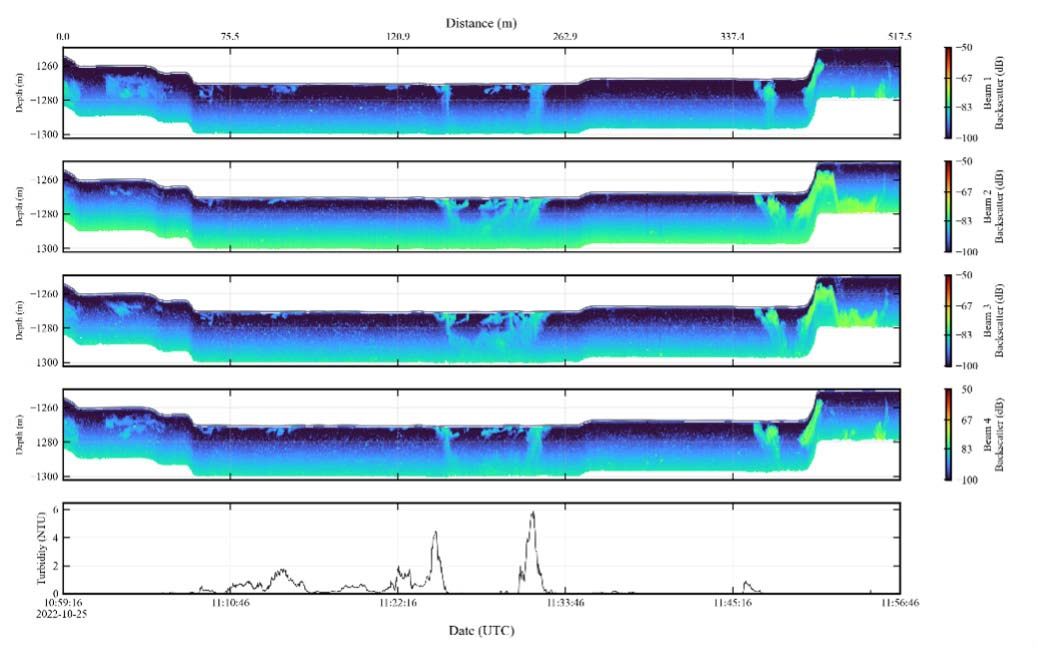
ROV transect showing the depth-adjusted derived Absolute Backscatter for all 4 ADCP beams, and Turbidity data collected from the OBS.
Conclusion
This case study demonstrates how the Teledyne RDI Workhorse ADCP has become an essential tool for deep-water sediment monitoring in challenging environments such as the NORI-D license area in the Pacific’s Clarion Clipperton Zone. By delivering reliable, high-resolution measurements of current velocity, turbulence, and acoustic backscatter, the Workhorse ADCP enables accurate characterization of sediment plumes generated by deep-sea mining activities.
Its integration with adaptive monitoring strategies and robust calibration workflows ensures compliance with international environmental standards and supports the sustainable development of critical mineral resources. The successful deployment and data-driven insights from this program highlight the ADCP’s unique capabilities and point toward future enhancements in analytics, visualization, and extended mission durations, reinforcing its role in advancing deep-sea environmental stewardship.
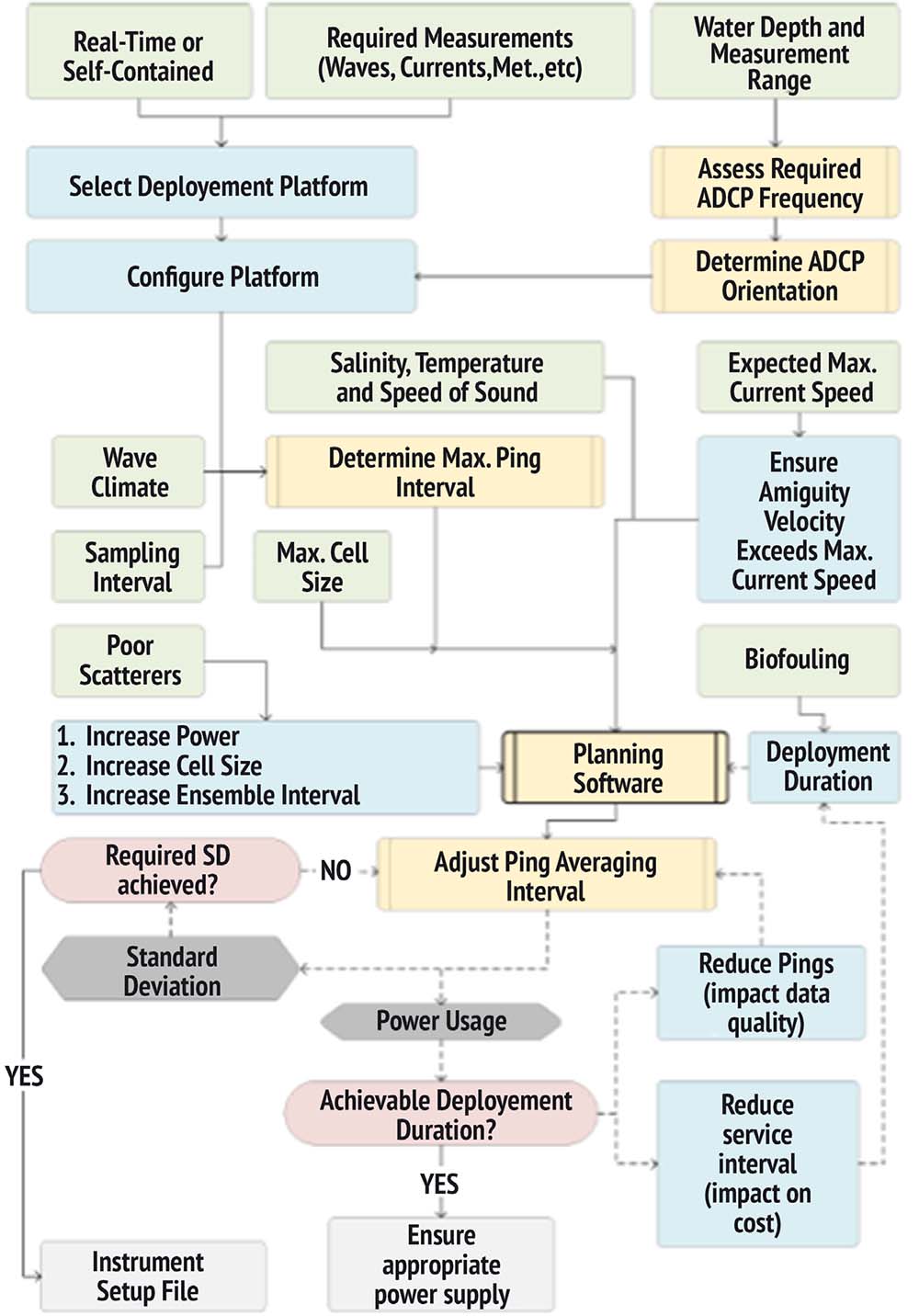
ADCP Purchase Decision Tree

