The survival of endangered Southern Resident killer whales depends on something many of us may never think about, the quiet.
Beneath the surface of busy shipping lanes, these killer whales live in a world increasingly dominated by human noise—engines, propellers and construction. For a species that hunts, communicates, and navigates entirely through sound, the rise in underwater noise has become one of the most significant threats to killer whales and their survival.
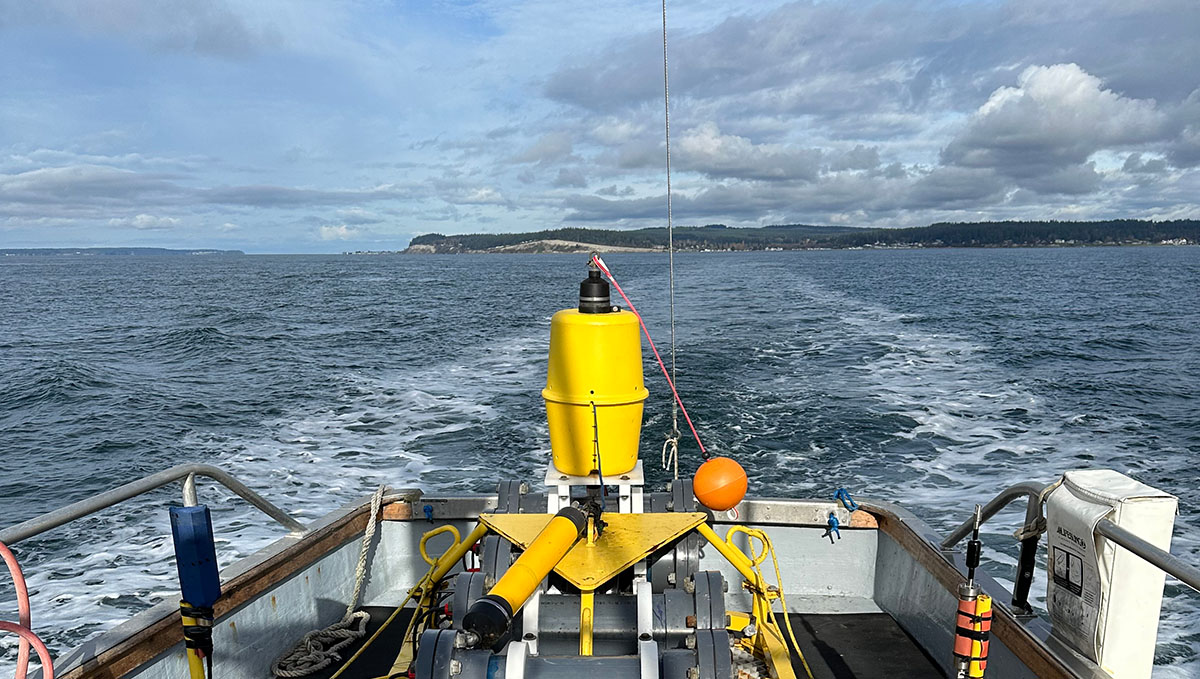
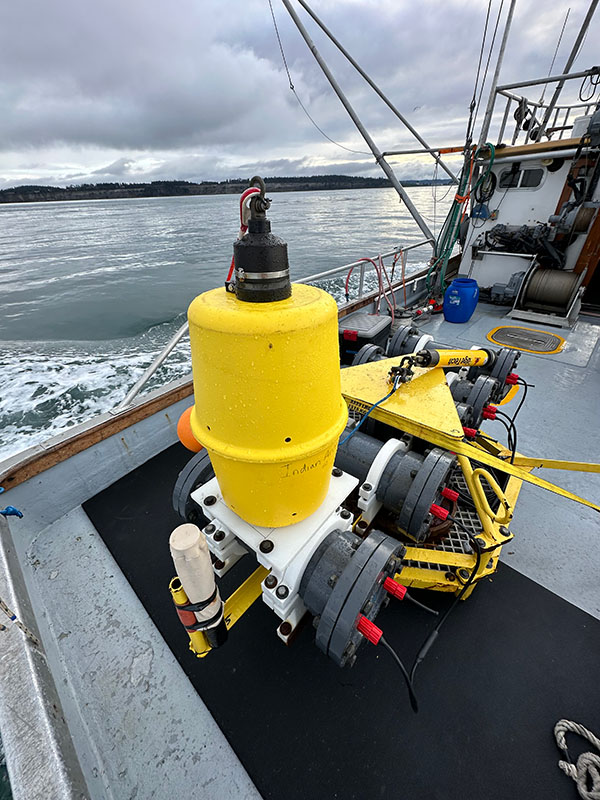
Protecting killer whales requires a clear understanding of their acoustic environment. This involves monitoring the noise levels of passing vessels or construction projects and the effectiveness of any noise mitigation measures put into place. SMRU Consulting, a global leader in marine mammal research, has developed a Coastal Acoustic Buoy (CAB) system, powered by
Teledyne RESON’s hydrophones, to meet these acoustic monitoring needs.
CAB systems and Teledyne RESON Hydrophones
 Teledyne RESON and SMRU Consulting have had a long-standing relationship for 15 years and have collaborated on a number of underwater noise monitoring projects to make the oceans quieter, including whale recovery projects in Canada and the US over the last 10 years.
The CAB system has been designed to deliver long-term, calibrated results and has been through extensive bench testing to ensure everything works flawlessly before it ever goes in the water.
The CAB system is made up of a bottom-moored lander that is connected to a communication surface buoy which is linked to a base station. The system operates in real-time but can also be deployed in autonomous configurations.
Using passive acoustics, the CAB system allows SMRU Consulting to measure underwater noise and monitor any marine mammal species that produce sound.
As a company that is owned by the University of St Andrews, the science and the measurements must be of the highest standard. That means choosing hydrophones that deliver clean, calibrated, and reliable data every time.
Teledyne RESON hydrophones are recognised as leaders in underwater acoustic measurement. Cormac Booth, Lead Scientist and Project Manager at SMRU Consulting, said:
“We’ve worked with Teledyne’s hydrophones for more than a decade because they simply don’t let us down. These hydrophones give us the confidence that what we’re reporting is accurate—regulators and conservation managers depend on that.”
Application in Quiet Sound programme
Southern Resident killer whales were listed as endangered in 2005 and numbers have continued to decline since then. At the time of writing, there are now only 74 Southern Resident killer whales remaining.
Based on the same model used in the Canadian ECHO programme which has been operating since 2016, the Quiet Sound programme was launched in 2021 as an initiative of the NGO Maritime Blue to help reduce the acoustic and physical impact of large commercial vessels in Washington waters on the critically endangered Southern Resident killer whales.
To support this mission, Quiet Sound commissions SMRU Consulting to deploy its CAB system in Useless Bay, an area adjacent to major shipping lanes leading into Washington’s largest ports of Seattle, Tacoma, and Everett. These shipping routes run directly through Southern Resident killer whale critical habitat, making the area an important monitoring point.
Quiet Sound has conducted three seasonal deployments of the
hydrophone system. It captures the period where they ask vessels to voluntarily slow down their speed and also the period of time when they don’t ask vessels to change anything about their normal behaviour. Jason Wood, Principal Scientist & Deputy Director – Technology at SMRU Consulting, said:
“We schedule deployments for the late fall and early winter, when whales are most likely to be in this part of the Salish Sea.”
The CAB system sits on an autonomous unit in an archival system that is then lowered 60 meters to the seabed. In this instance, data isn’t provided in real time, but every 3 months as the CAB system isn’t cabled to a buoy on the surface.
Once the season is over, the SMRU Consulting team run the audio files through a series of programmes. One of them measures noise levels in order to quantify the reduction in ambient noise as a result of voluntary slowdowns. The others are acoustic detectors which can tell how often the whales were nearby the hydrophone during that deployment.
Working in glacial fjords of the Washington waters, the Quiet Sound and SMRU Consulting team run into plenty of challenges. The strong currents are one of the biggest challenges in terms of getting good quality acoustic measurements as a fast flowing current past the hydrophone can mean that you won’t hear very well. Jason noted: “To minimise flow noise from the strong currents, we add a protective cover, much like the windshields used on microphones at sporting events”
Evidence of reduced underwater noise
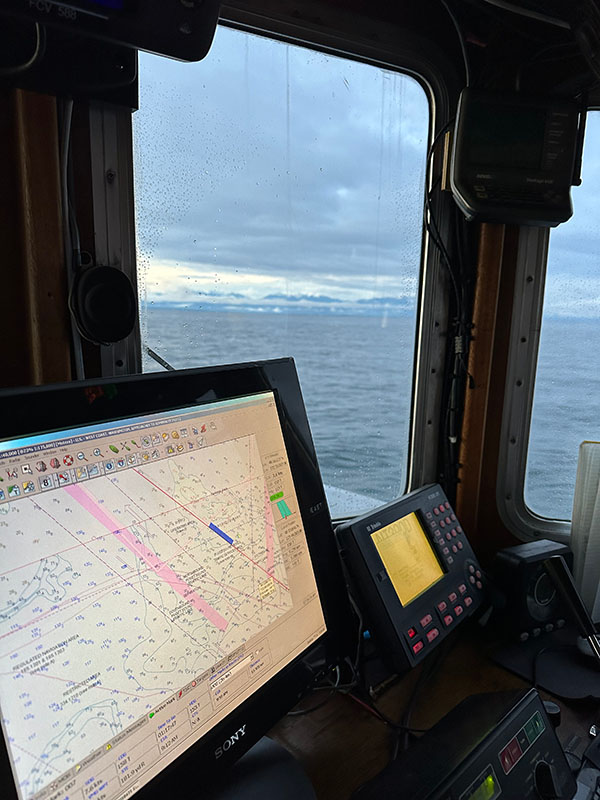 Hydrophone data has been essential, especially in the first year of the Quiet Sound programme, as evidence was needed to show that the slowing down of vessels was truly making a difference, in order to secure the programme’s future.
The Quiet Sound programme has shown over the years that when the slowdown period is in effect, it does get quieter underwater: both in the frequencies that the killer whales are using, as well as the average noise levels underwater. Teledyne RESON’s hydrophones have detected that underwater noise from vessels is reduced by 12-50% after Quiet Sound slowdowns.
Rachel Aronson, Quiet Sound Program Director, said:
“When noise levels exceed 110 decibels, whales rarely succeed at hunting. Below that threshold, their chances improve dramatically. In one season, we gained about 70 extra minutes each day below 110 decibels. That’s significant, it’s like giving the whales an extra hour of quiet.”
During the latest deployment, a rare superpod gathering of Southern Resident killer whales was detected in the major shipping lane – an event where all three whale family groups in the area came together. These social displays are acoustically rich, featuring calls, whistles, buzzing and echo bursts. “Seeing all the whales together makes me feel like we’re doing the right thing.” Rachel added.
A hopeful future
As programmes like Quiet Sound continues to evolve, so does the acoustic monitoring technology that underpins it. Jason said,
“We’re always exploring enhancements to the system: reducing power consumption, extending deployment durations, and enhancing the equipment for deeper or more demanding sites —all without compromising the calibrated, high-quality data that programmes like Quiet Sound rely on.”
The collaborative model behind Quiet Sound is itself a blueprint for future efforts: bringing together scientists, ports, vessel operators, regulators, and international shipping companies to solve shared environmental challenges. As Rachel Aronson concluded,
“If we can achieve this level of collaboration here, I believe we can do it elsewhere too.”
SMRU Consulting’s CAB system—powered by
Teledyne RESON hydrophones—will remain central to the understanding of underwater noise and shaping practical solutions. And as Quiet Sound demonstrates what is possible in one of North America’s busiest marine corridors, it provides a hopeful template for how coordinated action can support the recovery of endangered marine species while sustaining a thriving maritime industry.
About SMRU
A leading marine-mammal consultancy, SMRU Consulting was founded in 2006 as the commercial branch of the Sea Mammal Research Unit at the University of St Andrews.
Working in a range of sectors, from renewable energy to infrastructure and defence, its services include marine-mammal surveys, risk and impact assessments, noise and collision-risk modelling, and custom monitoring solutions understand and reduce the impacts of anthropogenic activities on marine mammals.
https://www.smruconsulting.com/
About Quiet Sound
Quiet Sound is a Washington-based collaborative effort, staffed by Maritime Blue, that brings together Tribes, agencies, NGOs, ports, and maritime partners to lessen the acoustic and physical impacts of vessels on Southern Resident killer whales. Through shared expertise, the program supports safer, quieter waters for both whales and maritime operations.
https://quietsound.org/
Watch the deployment of the CAP system in a timelapse.

